





Bavarian Alps & Mountain Lakes Photography Guide: Königssee, Eibsee, and Hintersee
Turquoise glacial waters, razor-sharp alpine reflections, and morning mist drifting above ancient pine forests: the mountain lakes of Bavaria offer some of the most breathtaking landscape photography opportunities in Europe. Master your compositions at Lake Königssee, Eibsee, and Hintersee with our expert field guide.
Recommended Camera Setup (EXIF Recipe)
1. Lake Eibsee: The Caribbean of the Bavarian Alps
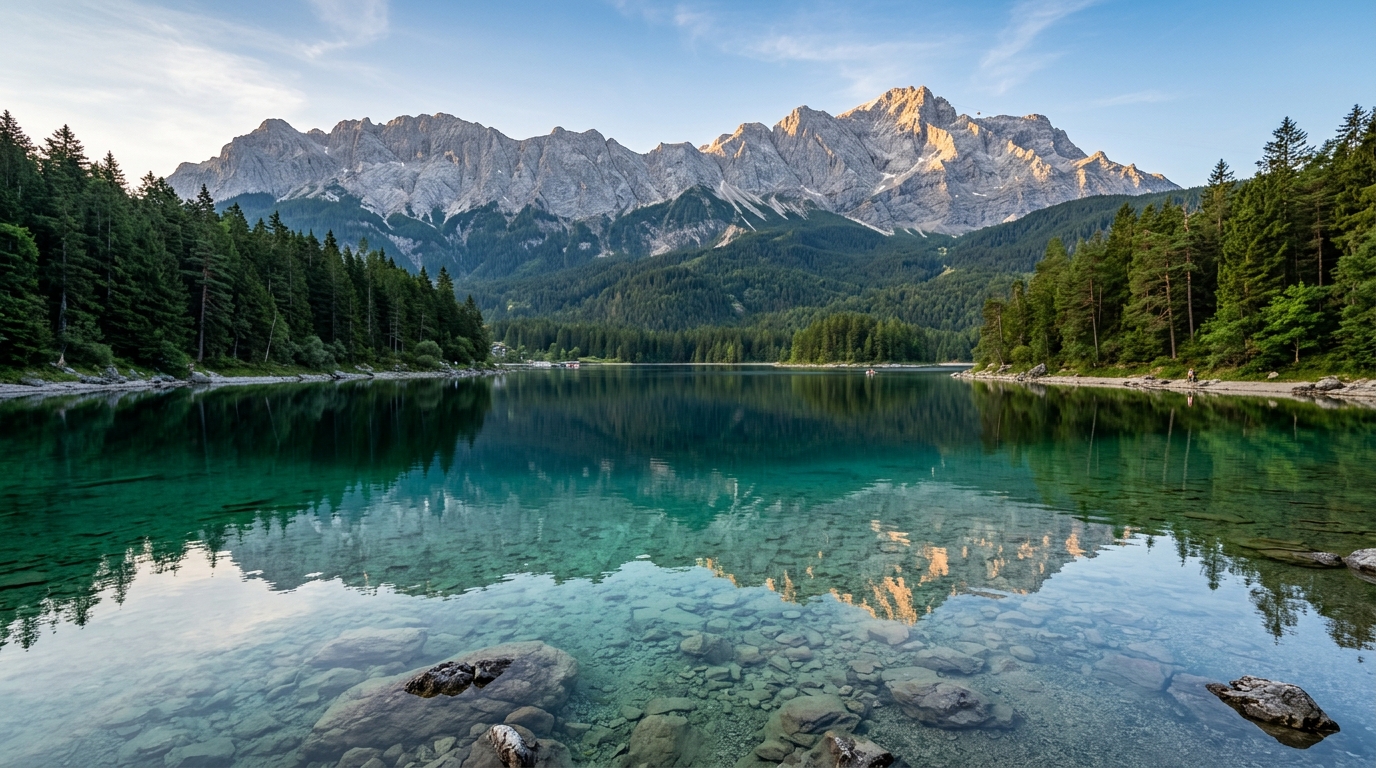
Perched at an elevation of nearly 1,000 meters right beneath Germany’s highest summit, the Zugspitze (2,962 m), Lake Eibsee is globally renowned for its surreal emerald and turquoise water clarity. Formed by a massive prehistoric rockslide, its shoreline is dotted with eight picturesque islands and submerged limestone boulders that serve as world-class foreground elements.
The definitive vantage point lies along the northern shoreline facing south toward the jagged Wetterstein mountain ridge. When you arrive for the golden hour at dawn, the earliest sunlight ignites the limestone cliffs of the Zugspitze in warm alpine glow (Alpenglühen) while the calm lake remains in deep, atmospheric blue shade.
Wind conditions are the make-or-break factor at Eibsee. Thermal breezes typically kick in around 09:30 AM, breaking up the mirror reflections. To capture the iconic glass-like mountain reflection, plan to be at your shooting spot at least 30 minutes before official sunrise.
- Prime Spot: The northern shore between Untersee and the main lake (approx. 25-minute walk from the Eibsee cable car parking lot).
- Foreground Composition: Look for smooth white limestone rocks just below the water’s surface or weathered pine driftwood.
- Filter Tactics: A circular polarizer (CPL) is essential to cut surface water glare and reveal the vibrant turquoise lakebed.
2. Lake Königssee & Obersee: Fjord-Like Drama in Berchtesgaden National Park
Resembling a dramatic Norwegian fjord carved into the Bavarian Alps, Lake Königssee is hemmed in by sheer vertical limestone walls rising nearly 2,000 meters, crowned by the imposing Watzmann East Face. Because vertical cliffs plunge straight into the water, there is no road or continuous walking path around the lake; access is granted solely via historic, whisper-quiet electric wooden passenger boats.
The first iconic stop is the St. Bartholomä peninsula. The distinctive red onion domes of the baroque pilgrimage church provide a stunning focal point against the dark, monolithic rock wall of Mount Watzmann. Capturing an approaching electric boat with the church in the midground yields an instantly recognizable Bavarian classic.
Continuing by boat to the final stop at Salet, a pleasant 15-minute hike brings you to Lake Obersee. At its far southern end sits Germany’s most iconic wooden boathouse, weathered by decades of alpine winters and surrounded by crystalline waters reflecting the towering Röthbach waterfall behind it.
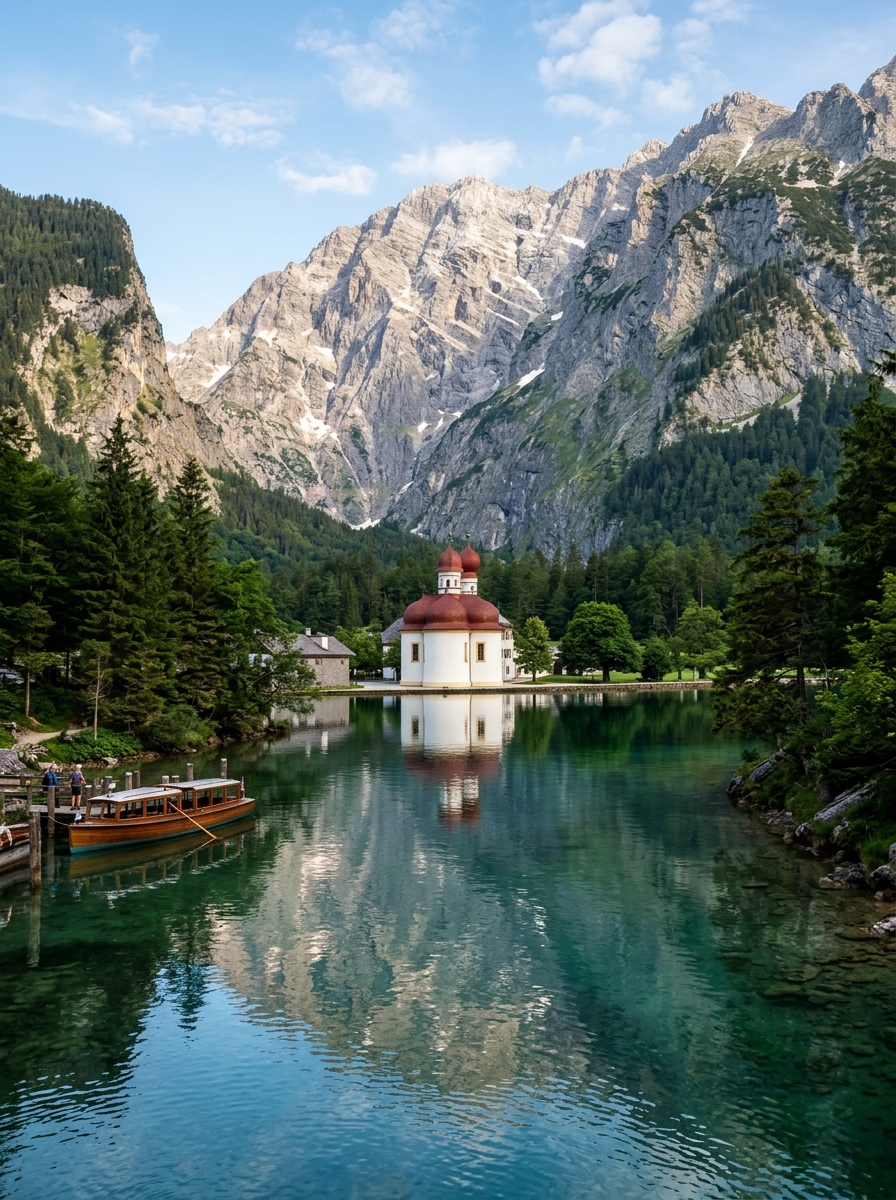
- Catch the First Boat: Always reserve tickets for the very first morning departure from Schönau am Königssee (usually 08:00 AM in peak season) to reach Obersee before the crowds.
- Malerwinkel Overlook: For travelers with limited time, hike 20 minutes from the main boat dock up to the "Painter’s Corner" (Malerwinkel) for a high-angle panoramic view looking south across the entire lake basin.
- Battery Management: Mountain valleys stay cold in the morning. Keep spare camera batteries warm inside your inner coat pocket.
3. Lake Hintersee & The Enchanted Forest (Zauberwald)
Located just west of the postcard village of Ramsau, Lake Hintersee offers a mystical atmosphere straight out of a Grimm brothers fairy tale. Huge rock boulders that fell into the lake millennia ago are now overgrown with miniature pine trees and deep green moss, creating natural stepping stones for creative compositions.
Adjoining the lake is the Zauberwald (Magic Forest), where the crystal-clear Ramsauer Ache mountain river tumbles over mossy boulders and ancient tree roots. It is a premier location for long-exposure water photography and intimate woodland macro captures.
Hintersee is easily accessible by car, allowing photographers to work with heavy tripods and filter sets right at the water’s edge without strenuous hiking. Autumn is especially magical here, when golden larch needles contrast against dusting snow on the surrounding peaks.
4. Essential Gear & Best Seasons for Bavarian Mountain Lakes
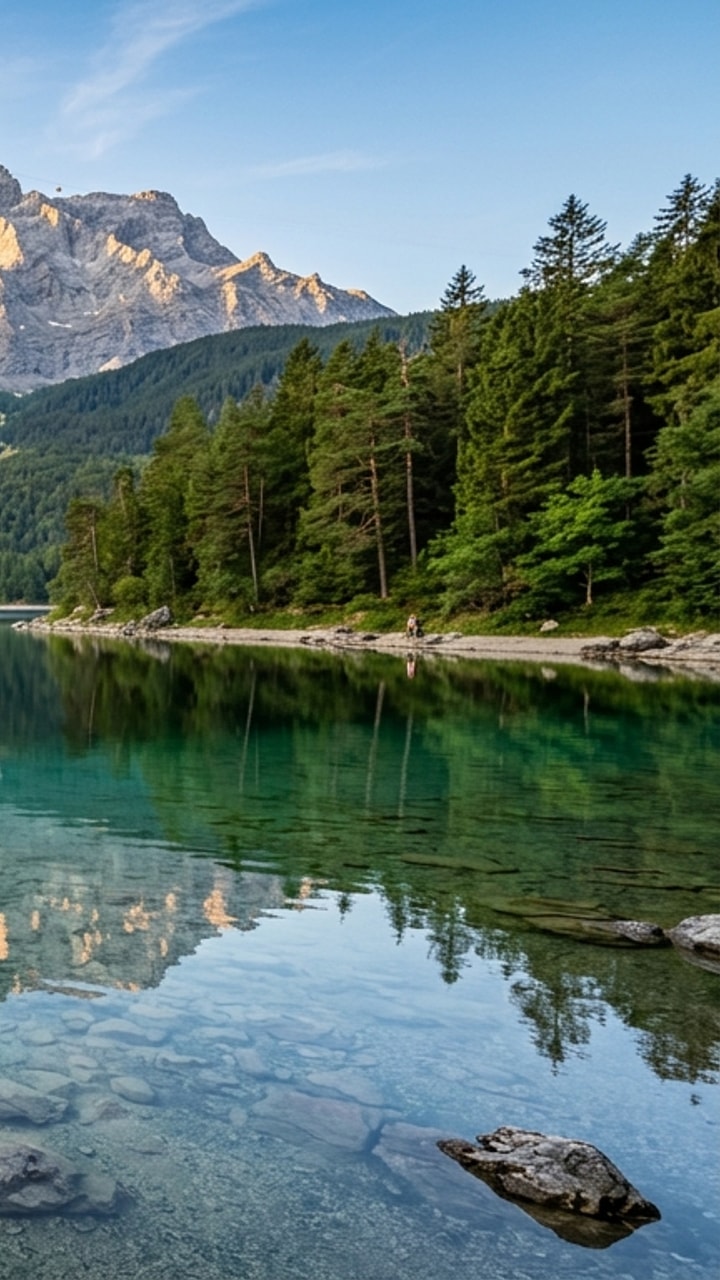
High-contrast lighting is the primary technical challenge in alpine landscape photography. When the rising sun illuminates snowy peaks, the valley basin remains deep in shadow. A modern full-frame sensor with high dynamic range or a 3-bracket auto-exposure sequence (AEB at -2, 0, +2 EV) ensures clean details in both bright snow and shadowy forests.
We recommend carrying a two-lens kit: an ultra-wide zoom (such as a 16–35mm f/2.8 or f/4) for expansive foreground-to-sky perspectives, paired with a telephoto zoom (70–200mm) to isolate mountain ridgelines, morning mist pockets, and distant boathouses.
- Spring (May–June): High water levels from snowmelt, roaring alpine waterfalls, and lush emerald meadows contrasting with snow-capped summits.
- Summer (July–August): Ideal for clear night skies and Milky Way photography over the peaks, though early mornings are essential to beat summer crowds.
- Autumn (October–November): The peak season for landscape photographers. Stable high-pressure systems, morning fog, and vibrant golden larches.
- Winter (December–February): Frozen lake margins, snow-laden fir trees, and crystal ice formations along alpine creek beds.
Frequently Asked Questions (FAQ)
What is the best time for mirror reflections at Lake Eibsee?
The calmest conditions occur from 30 minutes before sunrise up to about one hour after sunrise. By 09:30 AM, thermal heating generates breezes that ruffle the water surface.
Can I fly a camera drone at Lake Königssee or Obersee?
No. Lake Königssee and Lake Obersee are strictly within Berchtesgaden National Park. Operating consumer drones is prohibited by federal environmental law to safeguard alpine wildlife, with severe fines enforced.
Which boat departure should I book for Lake Königssee?
Book the first electric boat departure of the day (usually 08:00 or 08:30 AM) with a round-trip ticket to Salet. This gives you a peaceful 45-minute head start at the famous Obersee boathouse.
Is a circular polarizing filter really necessary for alpine lakes?
Yes, a high-quality CPL is indispensable. It cuts surface glare to reveal the emerald depth and submerged rocks, and enriches saturation in both pine forests and mountain skies.
Related Photography Guides
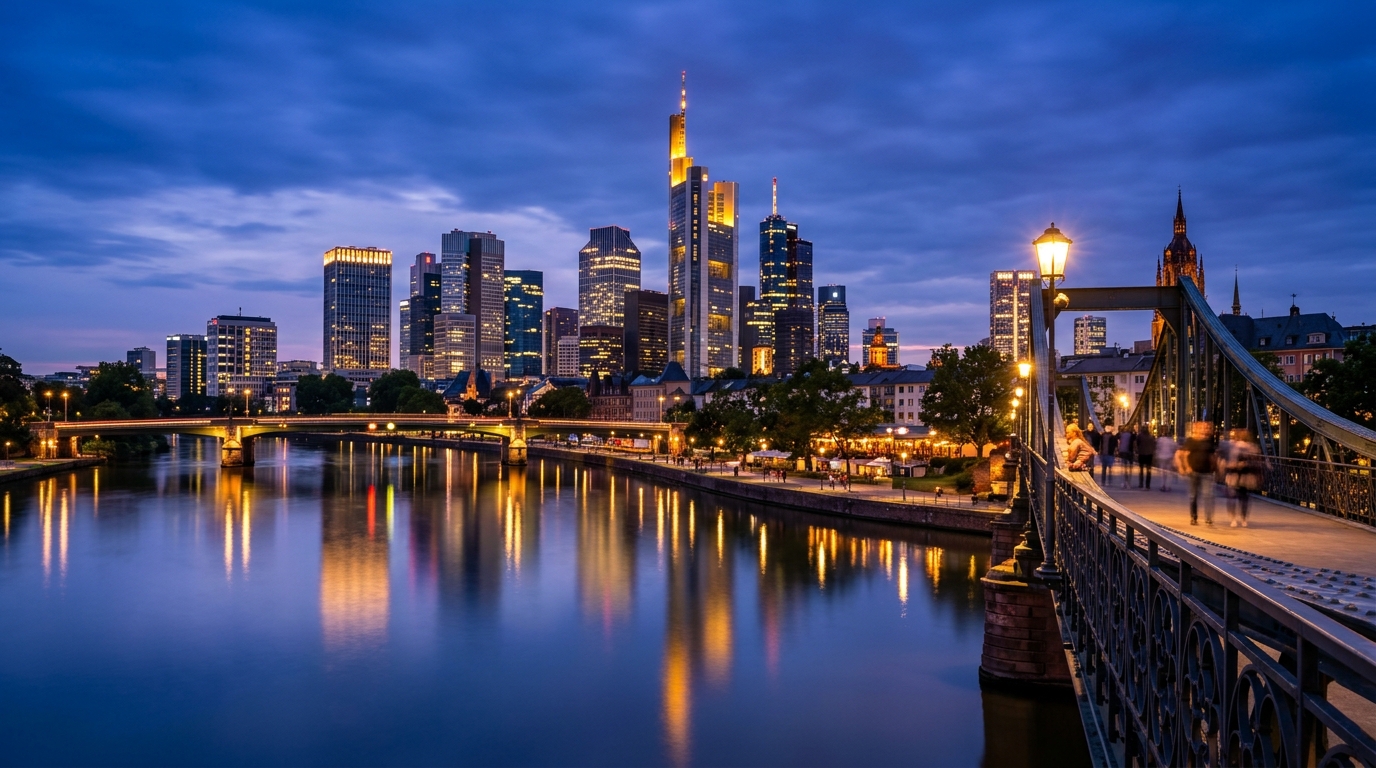
Top Photo Spots in Frankfurt: Skyline, Main Bridges, and Old Town in Perfect Light
Nicknamed "Mainhattan", Frankfurt am Main boasts Germany’s only true high-rise skyline, creating dramatic visual juxtapositions between futuristic skyscrapers, iron footbridges, and half-timbered medieval alleys.
Urban Photography in Berlin & Hamburg: Speicherstadt, Oberbaumbrücke & Architecture
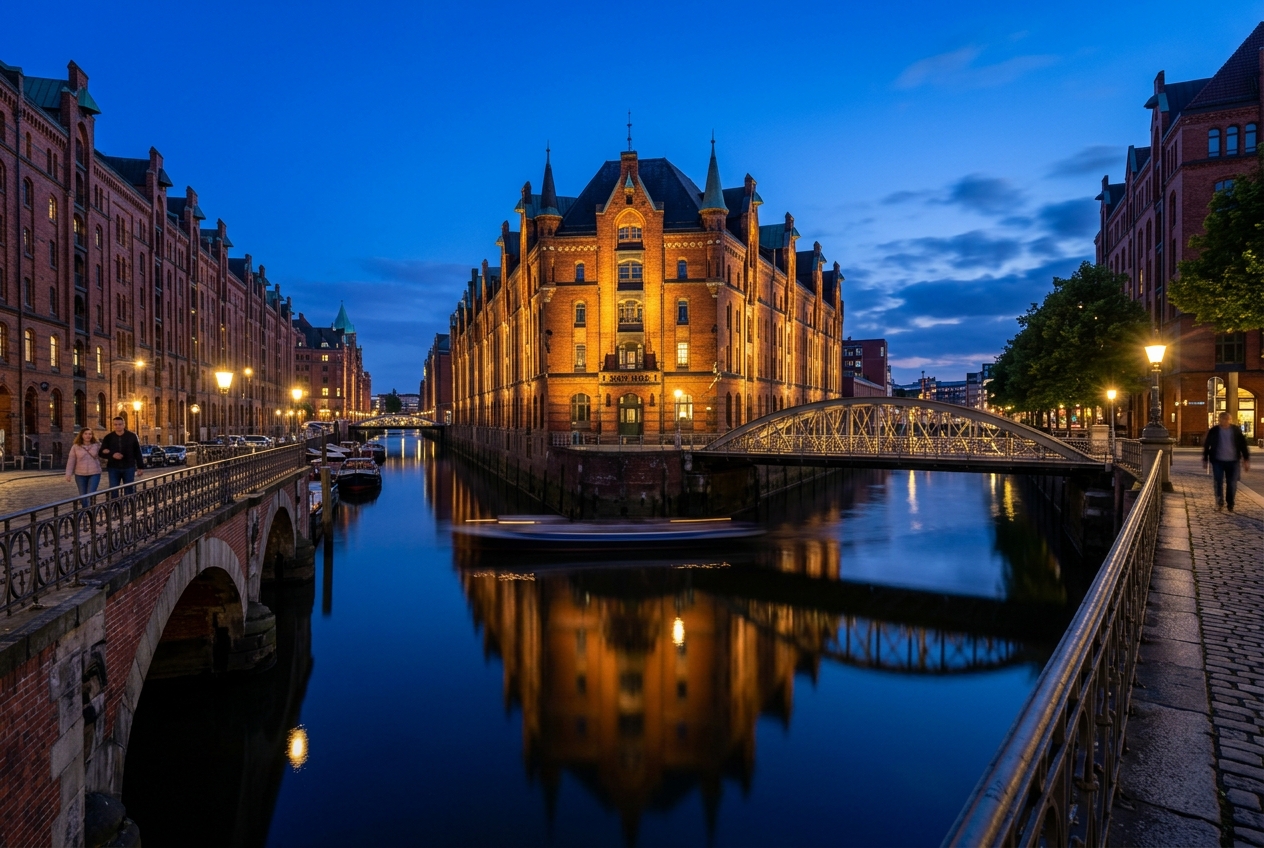
Berlin and Hamburg showcase two completely different philosophies of German urban photography: Berlin’s gritty street scenes and soaring Soviet-era avenues contrast against Hamburg’s historic red-brick maritime canals and ultra-modern glass harbor.
Landscape Photography in Saxon Switzerland: Bastei Bridge & Misty Peaks
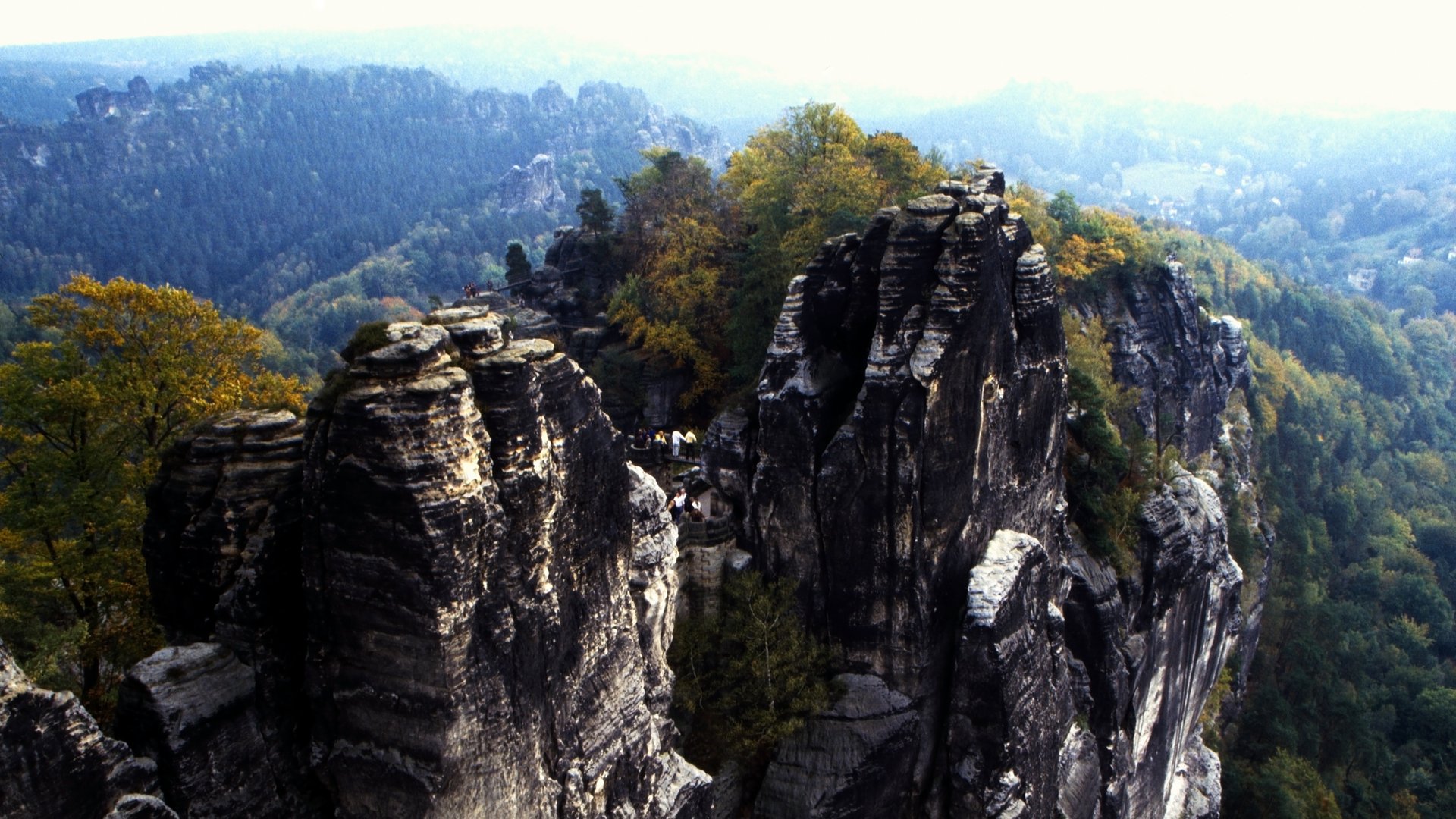
Bizarre sandstone spires, deep ravines, and mythical seas of fog rolling through the Elbe River valley: Saxon Switzerland is Germany’s most dramatic setting for monumental landscape photography.